Best Tennis Shoes for Flat Feet (2026): Picks + Buying Guide
Six stable, widely available court shoes for flat feet, plus how to check your arches and what to look for before you buy.

If you have low or fallen arches, tennis can be tough on your feet. Every split step, wide forehand, and hard stop asks your foot to stay stable while it moves sideways, and flat feet tend to roll inward when they're tired. The good news: the right court shoe makes a big difference. This guide rounds up the best tennis shoes for flat feet, shows you how to check your arch at home, and explains exactly which features matter so you can buy with confidence.
Why Flat Feet Need a Different Tennis Shoe
Flat feet usually mean the arch collapses more than average when you put weight on it. That inward roll, called overpronation, is fine for some people and painful for others. In tennis, the problem gets amplified because you are constantly cutting, sliding, and pushing off the inside edge of your foot.
A good court shoe for flat feet does three jobs. It limits excess inward roll through the midfoot, it holds your heel in place so your foot does not slide on lateral moves, and it gives you a wide, stable base to land on. Cushioning matters too, but stability comes first.

The Best Tennis Shoes for Flat Feet: Our Picks
These picks are well-known, widely sold model families with a reputation for stability. Models get updated often, so check the current version's fit and features before you buy.
ASICS Gel-Resolution
- SupportHigh stability
- Best forFrequent players, hard courts
- WidthsStandard and wide in many sizes
The Gel-Resolution line is one of the most popular stability-focused tennis shoes for good reason. It has a supportive midfoot structure, a secure heel, and a wide, flat base that feels planted on lateral moves. For flat feet, that midfoot support helps keep your arch from collapsing as you push off. The insole is removable, so it works well with orthotics.
Pros
- Very stable during side-to-side movement
- Durable outsole for hard courts
- Often available in wide sizes
Cons
- Firm feel may take a few sessions to break in
- Heavier than speed-focused shoes
ASICS Gel-Dedicate
- SupportModerate stability
- Best forRecreational players
- WidthsStandard and wide in many sizes
If you play once or twice a week, the Gel-Dedicate gives you a lot of what makes ASICS court shoes good at a lower price tier. It has a supportive upper, rearfoot gel cushioning, and a stable platform. Add an over-the-counter arch support and it becomes a solid everyday option for flat feet.
Pros
- Comfortable out of the box
- Good entry-level stability
- Easy to find in stores
Cons
- Less durable for heavy, frequent play
- Not as locked-in as premium stability models
New Balance 996 / 1006-Style Court Shoes
- SupportModerate to high
- Best forWide feet, all-court play
- WidthsMultiple widths, including extra wide
New Balance is known for offering many of its shoes in multiple widths, which matters because flat feet are often wider through the midfoot. Its 996 family is a lighter, quicker court shoe, while its more supportive court models lean toward stability and durability. Either way, the wider sizing gives your forefoot room to spread without hanging over the edge of the platform.
Pros
- Excellent width options
- Roomy toe box
- Works well with orthotics
Cons
- Lighter models offer less arch control
- Fit varies between model families
adidas Barricade
- SupportHigh stability
- Best forAggressive baseliners
- WidthsMostly standard
The Barricade has a long history as a tough, supportive tennis shoe. It feels structured and stable, with a firm chassis that resists twisting, which is exactly what a flat foot needs on hard lateral stops. If you tend to wear through shoes quickly, it is worth a look.
Pros
- Very durable outsole
- Strong torsional stability
- Secure, locked-in heel
Cons
- Can feel snug for wide feet
- Stiffer and heavier than many rivals
K-Swiss Hypercourt
- SupportModerate
- Best forPlayers who want speed
- WidthsMostly standard
The Hypercourt family is lighter and lower to the ground than most stability shoes, which many players like for quick footwork. It still offers a supportive upper and a stable base. It suits people with mildly flat feet, especially if you pair it with a supportive insert.
Pros
- Light and responsive
- Good court feel
- Comfortable fit for many foot shapes
Cons
- Less arch control than heavier models
- Not ideal for severe overpronation
Brooks Adrenaline GTS
- SupportStability (running)
- Best forWalking, warm-ups, running
- WidthsStandard, wide, and extra wide
This is not a tennis shoe, and you should not play matches in it. But it is one of the most recommended stability running shoes for flat feet, and it is a great choice for walking to the courts, jogging warm-ups, and everyday wear. Brooks' guidance system helps keep excess inward roll in check without feeling stiff.
Pros
- Smooth, supportive ride
- Wide range of widths
- Comfortable for long days on your feet
Cons
- No lateral support for court play
- Running outsole wears quickly on courts
Comparison Table
| Shoe | Support level | Best for | Wide options | Court use |
|---|---|---|---|---|
| ASICS Gel-Resolution | High | Frequent players | Yes | Hard and clay versions |
| ASICS Gel-Dedicate | Moderate | Recreational play | Yes | Mainly hard court |
| New Balance 996 / 1006-style | Moderate to high | Wide feet | Yes, multiple widths | All-court |
| adidas Barricade | High | Durability | Limited | Hard and clay versions |
| K-Swiss Hypercourt | Moderate | Speed and agility | Limited | All-court |
| Brooks Adrenaline GTS | Stability (running) | Walking and running | Yes | Not for court play |
How to Tell If You Have Flat Feet (The Wet Test)
You do not need special equipment to get a rough idea of your arch type. Try the wet test:
- Wet your feet. Step into a shallow pan of water or wet the soles of your feet.
- Stand naturally. Step onto a piece of dark paper, a paper bag, or dry concrete with your full weight.
- Step off and look. Check the shape your footprint leaves behind.
- Read the print. If you see almost the whole sole with little or no inward curve, you likely have flat or low arches. A clear curve with a narrow band means a normal arch, and a very thin band means a high arch.
It also helps to look at an old pair of shoes. Heavy wear along the inside edge of the sole and uppers that lean inward are common signs of overpronation. The Mayo Clinic has a helpful overview of flatfeet symptoms and causes if you want to learn more.
Buying Guide: What to Look For in Shoes for Flat Feet

Lateral support
Tennis is a side-to-side sport. A supportive upper, reinforced sidewalls, and a wide base keep your foot on the platform when you change direction. Press on the side of the shoe: it should feel firm, not floppy.
Midfoot support and medial posts
Many stability shoes use firmer foam or a supportive structure on the inner (medial) side of the midsole. This slows the inward roll that comes with flat feet. Twist the shoe gently: a good stability shoe resists twisting through the middle.
Heel counter
The heel counter is the stiff cup around the back of the shoe. Squeeze it. It should barely flex. A firm heel counter keeps your heel aligned and reduces wobble on landings.
Wide toe box and width options
Flat feet often spread more under load. A roomy toe box and wide sizing prevent pinching, blisters, and that feeling of your foot spilling over the edge.
Removable insoles for orthotics
If you use custom or over-the-counter orthotics, choose a shoe with a removable insole. Take the stock insole out and put your orthotic in so the shoe does not become too shallow.
Outsole for your court surface
- Hard courts: a thick, durable rubber outsole, usually with a modified herringbone pattern.
- Clay courts: a full herringbone tread that grips loose surfaces and sheds clay.
- Grass courts: nubbed outsoles designed for grass, where allowed.
- Mixed play: an all-court outsole is a reasonable compromise.
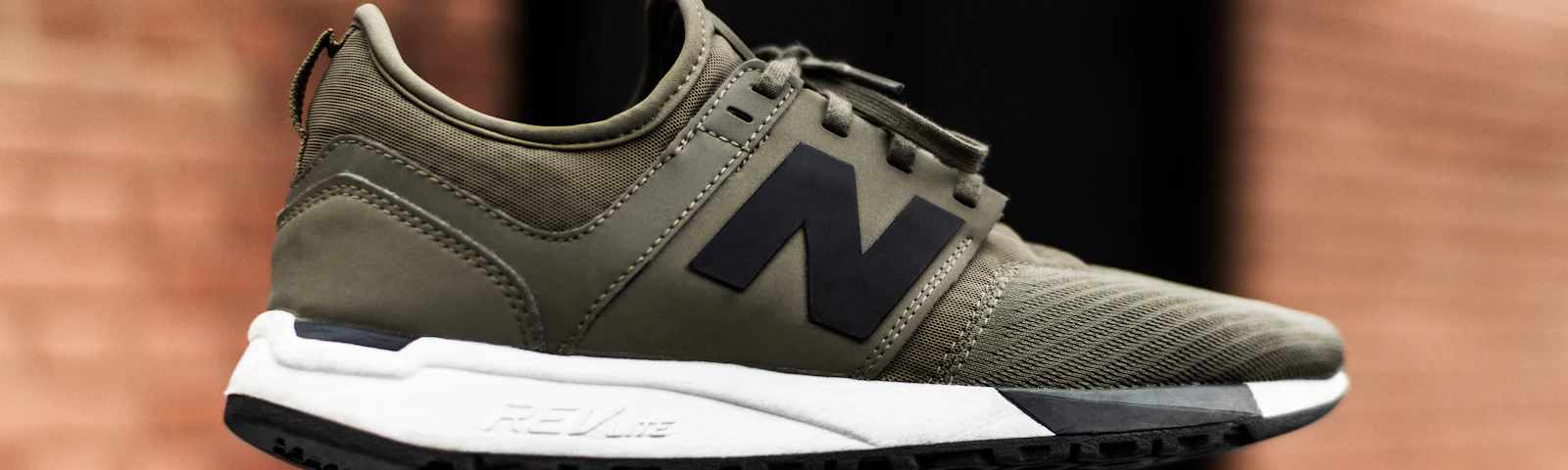
Running Shoes vs. Tennis Shoes for Flat Feet
It is tempting to use one pair for everything, but running and tennis shoes are built for different movements. Running shoes are designed for forward motion, with soft foam, a raised heel, and flexible forefoot. That works well for running, but it can feel unstable when you cut sideways, and a running outsole wears down fast on a hard court.
Tennis shoes are lower, flatter, and more structured, with reinforced sides for lateral moves. If you also run, look for a dedicated stability running shoe. Our guide on how to choose running shoes for flat feet walks through stability, motion control, and gait analysis in detail.
Help Your Feet Beyond the Shoe
Shoes are only part of the picture. Strengthening the small muscles of your feet and lower legs can improve arch control and reduce fatigue late in a match. Try a few of our flat feet exercises a few times a week, and if you feel tightness or heel pain in the morning, these plantar fasciitis stretches can help.
Not sure which support level fits you? Our shoe finder quiz asks a few quick questions about your arch, sport, and fit to narrow down your options.
When to See a Podiatrist
Flat feet are common and often painless. But some signs mean it is time to get a professional opinion:
- Arch, heel, or ankle pain that lasts more than a couple of weeks
- Pain that gets worse during or after play despite supportive shoes
- One foot that has recently become flatter than the other
- Swelling along the inside of the ankle
- Numbness, tingling, or stiffness in the foot
A podiatrist can assess your gait, rule out conditions like posterior tibial tendon problems, and recommend custom orthotics if you need them.
The Bottom Line
The best tennis shoes for flat feet combine a stable midfoot, a firm heel counter, strong lateral support, and enough room for an orthotic. For most players, a stability-focused model like the ASICS Gel-Resolution is a safe starting point, while wide-footed players should look at brands with real width options like New Balance. Match the outsole to your court, replace shoes when they lose their structure, and see a podiatrist if pain sticks around. With the right pair, flat feet do not have to hold your game back.
Frequently asked questions
Can I play tennis with flat feet?
Yes. Many players with flat feet play comfortably for years. The key is a stable court shoe with firm midfoot support, a supportive heel counter, and room for an orthotic if you use one.
Are running shoes okay for playing tennis?
Not really. Running shoes are built for straight-line motion and usually lack the lateral support and durable outsole tennis needs, which raises the risk of rolled ankles. Keep running shoes for running and walking.
Should I use orthotics in my tennis shoes?
If a podiatrist has prescribed orthotics or an over-the-counter arch support helps you, choose a tennis shoe with a removable insole so the orthotic sits flat. Bring the orthotic when you try shoes on.
How often should I replace tennis shoes?
It depends on how often you play and on what surface. Replace them when the outsole tread is worn smooth, the midsole feels flat, or the shoe no longer feels stable during side-to-side movement.
What is the difference between hard court and clay court shoes?
Hard court shoes use a tougher, more durable outsole, often with a modified herringbone pattern. Clay court shoes use a full herringbone tread that grips loose surfaces and releases clay easily.
Disclaimer: This article is for general information only and isn't a substitute for advice from your doctor, dermatologist, podiatrist or a registered dietitian. Check with a professional before starting a new diet, supplement, skin treatment or exercise program, especially if you have a health condition.
Keep reading
More Gear Guides
How to Choose Running Shoes for Flat Feet (Plus 5 Proven Picks)
Stability, motion control, or neutral plus an orthotic? Here is how to pick running shoes for flat feet, with a fit checklist and five go-to model families.
Beginner Strength Training Guide: Your First 8 Weeks
Learn the five movement patterns, how sets and reps work, and follow a simple 8-week, 3-day full-body plan to start lifting with confidence.
HIIT vs Steady-State Cardio for Fat Loss: Which Is Better?
Short and intense or long and steady? Compare HIIT and steady-state cardio, try a sample session of each, and learn how to mix both for fat loss.