How to Choose Running Shoes for Flat Feet (Plus 5 Proven Picks)
Stability, motion control, or neutral plus an orthotic? Here is how to pick running shoes for flat feet, with a fit checklist and five go-to model families.
Flat feet do not have to slow you down, but they do change what you should look for in a running shoe. If your arches collapse a lot when you land, the wrong pair can leave you with sore arches, aching shins, or cranky knees. This guide explains how to choose running shoes for flat feet step by step, from understanding overpronation to the fit checks that matter most, and finishes with five well-known stability shoe families worth trying.
Flat Feet and Overpronation, Explained
When your foot lands, it naturally rolls inward a bit to absorb shock. That is called pronation, and it is normal. Overpronation means your foot rolls in further or for longer than usual, so the arch flattens and your ankle tips inward.
Flat feet and overpronation often travel together, but they are not the same thing. Some people have low arches and very little inward roll, and some people with normal arches overpronate when they get tired. That is why the best running shoes for flat feet are chosen based on how your foot moves, not just how it looks standing still.
Common signs you overpronate include heavy wear on the inside edge of your outsoles, shoes that tilt inward when placed on a table, and pain along the arch, inner shin, or inside of the knee after runs.
How to Choose Running Shoes for Flat Feet: Stability, Motion Control, or Neutral
Running shoes fall into a few broad support categories. Here is how they compare for flat feet:
| Shoe type | How it supports | Best for | Trade-offs |
|---|---|---|---|
| Stability | Firmer foam, guide rails, or a supportive frame on the inner side | Mild to moderate overpronation; most flat-footed runners | Slightly heavier than neutral shoes |
| Motion control | Rigid, very firm structure with a wide base | Severe overpronation, heavier runners | Heavier, stiffer, fewer options available |
| Neutral + orthotic | Cushioned neutral shoe; the orthotic provides arch support | Runners with custom or prescribed orthotics | Needs a removable insole and enough depth |
| Neutral only | Cushioning without added support | Flat feet with little inward roll and no pain | Less control if you tire or overpronate late in runs |
For most people, a modern stability shoe is the sweet spot. Today's stability shoes are much less clunky than older designs and often guide your foot gently rather than forcing it into position.
Get a Gait Analysis (or Do a DIY Version)
A gait analysis is the most useful step when you choose running shoes for flat feet. Many specialty running stores will film you on a treadmill and play it back in slow motion to show how your feet and ankles move.
If you cannot get to a store, you can do a simple version at home:
- Do the wet test. Wet your feet, step onto dark paper, and check your print. A full, wide footprint suggests a low arch.
- Check old shoes. Look for wear concentrated on the inside of the heel and forefoot.
- Film yourself. Ask a friend to record you from behind running on a treadmill or flat path. Watch whether your ankles cave inward after landing.
- Note your pain. Arch, inner shin, or inner knee pain is a clue that you may need more support.
Fit Checklist for Flat Feet
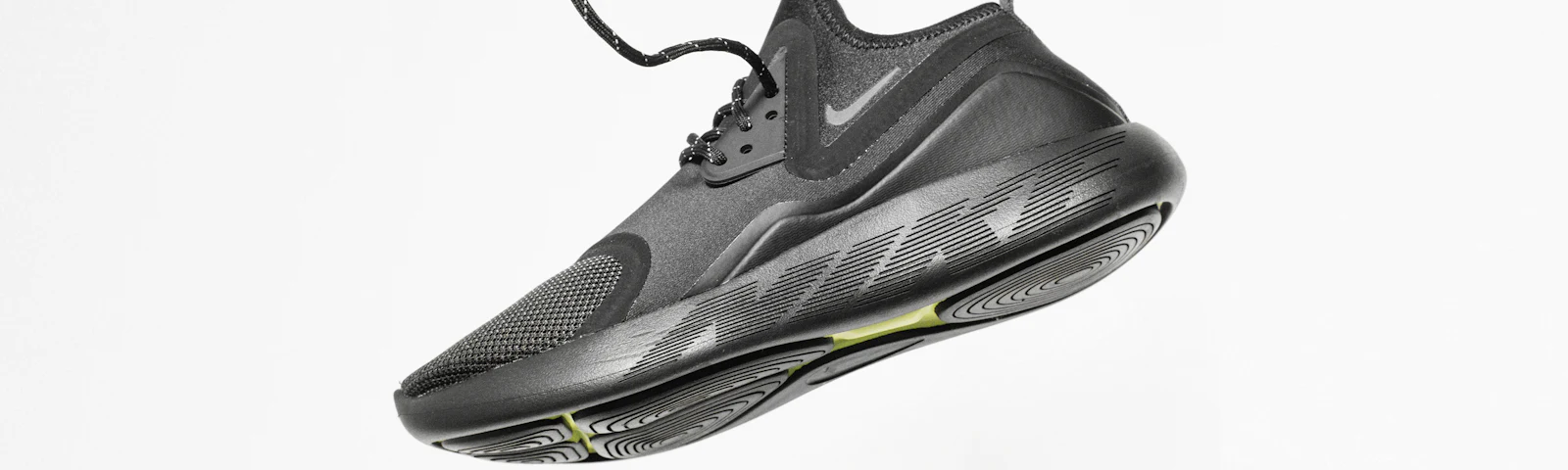
Use this checklist every time you try on a pair:
- Thumb's width of space between your longest toe and the end of the shoe.
- Roomy toe box so your forefoot can spread on landing. Ask for wide sizes if needed.
- Secure heel with no slipping when you jog in place.
- Firm heel counter that barely flexes when you squeeze it.
- Supportive midfoot that resists twisting when you wring the shoe gently.
- Removable insole if you use orthotics. Test the shoe with them in.
- No pressure points along the arch, sides, or top of the foot.
Best Running Shoes for Flat Feet: 5 Picks
These model families have long reputations as stability favorites. Brands update them regularly, so check the current version's fit before you buy.
Brooks Adrenaline GTS
- SupportStability
- Best forDaily training
- WidthsStandard, wide, extra wide
The Adrenaline GTS is one of the most recommended stability shoes for flat feet. Brooks uses a guidance system that supports your knees and arch when you need it without feeling rigid. It is a dependable all-rounder for easy runs, long runs, and walking.
Pros
- Smooth, balanced ride
- Wide range of widths
- Works for running and walking
Cons
- Not the lightest option for speed work
ASICS Gel-Kayano
- SupportStability
- Best forLong runs, higher mileage
- WidthsStandard and wide
The Gel-Kayano is ASICS' premium stability shoe, with generous cushioning and a stable platform. It is a strong pick if you want plenty of softness underfoot along with support for a low arch.
Pros
- Plush, protective cushioning
- Stable, secure fit
Cons
- Bulkier than lighter trainers
ASICS GT-2000
- SupportStability
- Best forEveryday miles
- WidthsStandard and wide
The GT-2000 offers much of the Kayano's support in a lighter, simpler package. It is a sensible first stability shoe for newer runners with flat feet.
Pros
- Lighter than most premium stability shoes
- Versatile for many paces
Cons
- Less cushioning for very long runs
Saucony Guide
- SupportLight to moderate stability
- Best forRunners who dislike firm posts
- WidthsStandard and wide
The Guide offers gentle support that feels closer to a neutral shoe. It suits runners with flat feet who overpronate only a little or who find traditional stability shoes too firm.
Pros
- Subtle, natural-feeling support
- Comfortable upper
Cons
- May not be enough for heavy overpronation
Hoka Arahi
- SupportStability
- Best forRunners who want soft and light
- WidthsStandard and wide
The Arahi pairs Hoka's thick cushioning with a supportive frame that keeps the foot centered. It feels light for a stability shoe and many flat-footed runners like its rocker-style ride.
Pros
- Soft yet stable
- Light for the amount of cushion
Cons
- High stack height takes some getting used to
Also worth trying: the New Balance 860, a long-running stability shoe known for wide sizing options.
Free interactive toolShoe Finder QuizFive quick questions to find the right shoe type for your feet.OpenWhen to Replace Your Running Shoes
A common rule of thumb is to replace running shoes every 300 to 500 miles. Heavier runners and people who run mostly on pavement may land at the lower end. Supportive foams break down over time, and a worn stability shoe stops doing its job long before the upper looks beat up.
- The midsole looks creased or feels flat and dead.
- The outsole is worn smooth, especially on the inside edge.
- The shoe tilts inward when you set it on a table.
- New aches show up in your arches, shins, or knees.
Tracking your mileage makes this easy. Our running pace calculator helps you plan runs, and logging them shows when it is time for a new pair.
Support Your Feet Beyond the Shoe
Shoes help, but strong feet help too. A few minutes of flat feet exercises a few times a week can build arch strength, and plantar fasciitis stretches are useful if you get heel pain. If you are just getting started, ease in with our beginner's guide to starting a running routine. Play tennis too? See our picks for the best tennis shoes for flat feet, since running shoes are not built for the court.
When to See a Podiatrist
See a podiatrist or doctor if you have pain that lasts more than a couple of weeks, pain that wakes you up or is worse in the morning, swelling on the inside of the ankle, or one foot that is becoming flatter than the other. A professional can check for underlying problems and fit you for custom orthotics if needed. The Mayo Clinic has a clear overview of flatfeet if you want more background.
Once you know how to choose running shoes for flat feet, the process gets simple: understand your gait, pick the right support category, check the fit carefully, and replace pairs on time.
Frequently asked questions
Do all flat-footed runners need stability shoes?
No. Some people with flat feet run comfortably in neutral shoes. If your feet roll inward a lot or you get arch, shin, or knee pain, a stability shoe is a sensible place to start.
What is the difference between stability and motion control shoes?
Stability shoes add moderate support to limit inward roll while staying fairly light and flexible. Motion control shoes are firmer and more rigid, made for heavy overpronation or runners who need maximum support.
Can I put orthotics in running shoes?
Yes. Choose a shoe with a removable insole and enough depth for the orthotic. Many people with custom orthotics do well in a neutral shoe because the orthotic already provides the support.
How many miles do running shoes last?
A common guideline is roughly 300 to 500 miles, depending on your weight, running surface, and the shoe. Replace them sooner if the midsole feels flat or new aches appear.
Is a gait analysis worth it?
It can be. A video gait analysis at a specialty running store shows how your feet and ankles move and helps narrow your options, though comfort on your own runs should be the final test.
Disclaimer: This article is for general information only and isn't a substitute for advice from your doctor, dermatologist, podiatrist or a registered dietitian. Check with a professional before starting a new diet, supplement, skin treatment or exercise program, especially if you have a health condition.
Keep reading
More Gear Guides
Best Tennis Shoes for Flat Feet (2026): Picks + Buying Guide
Six stable, widely available court shoes for flat feet, plus how to check your arches and what to look for before you buy.
Beginner Strength Training Guide: Your First 8 Weeks
Learn the five movement patterns, how sets and reps work, and follow a simple 8-week, 3-day full-body plan to start lifting with confidence.
HIIT vs Steady-State Cardio for Fat Loss: Which Is Better?
Short and intense or long and steady? Compare HIIT and steady-state cardio, try a sample session of each, and learn how to mix both for fat loss.