Home Gym Weight Training: A 3-Day Plan With Minimal Gear
Home gym weight training with the gear most people actually have: a pair of adjustable dumbbells, a bench and a band. A three-day full-body plan with sets, reps and progression, how to make light weights hard, and what to buy next when you outgrow it.
Home gym weight training has a reputation problem: people assume it means a garage full of iron or it does not count. It counts. A pair of adjustable dumbbells, a flat bench and a resistance band cover every major movement pattern the body has, and a three-day plan built on them, done consistently and progressed honestly, builds more muscle and strength than the four-day gym program most people start and quit by February. This guide is that plan: the gear, the three sessions, how to progress when you cannot just add a plate, and the honest limits of minimal equipment.
A note on who this is for. If you have never lifted, read our beginner strength training guide first; it covers the movement basics this plan assumes. If you have lifted in a gym and are moving home, this plan will feel light for the first two weeks and then it will not.
The gear
- Adjustable dumbbells. A pair that goes to at least 50 pounds each, ideally 70 to 90. This is the one purchase worth spending on; everything else can be cheap.
- A flat bench. Adjustable to incline is a bonus. A sturdy ottoman or a sealed wooden box works for the first month.
- A long loop resistance band, medium to heavy. For rows, pull-aparts, assisted pull-ups if you have a bar, and for adding resistance to the top of a lift.
- A doorway pull-up bar, if your frame allows it. Not required, but it adds the one movement dumbbells do poorly.
- A mat and a timer. Our free interval timer runs the rest periods.
Total cost without the pull-up bar: 250 to 500 dollars depending on the dumbbells. With a used bench and budget dumbbells, under 200.
The structure
Three full-body sessions a week on non-consecutive days (Monday, Wednesday, Friday is the obvious version). Each session has one lower-body push (squat pattern), one lower-body pull (hinge pattern), one upper push, one upper pull, and one accessory or core movement. Forty to fifty minutes including warm-up.
The sets and reps follow a simple rule across the three days: a strength day (lower reps, heavier), a volume day (moderate reps), and a density day (higher reps, shorter rest). Same movements, different stress, which is what keeps minimal gear working for months.
Warm-up, every session
Five minutes: a minute of marching or jump rope, ten bodyweight squats, ten hip hinges with hands on the hips, ten push-ups from the knees or the bench, ten band pull-aparts, and one light set of the first exercise. Then start.
Day 1: strength (4 to 6 reps)
- Goblet squat or dumbbell front squat: 4 sets of 5. Hold one dumbbell at the chest (goblet) or two at the shoulders (front squat). Sit between the knees, chest up, heels down.
- Dumbbell Romanian deadlift: 4 sets of 6. Soft knees, hinge at the hips, dumbbells sliding down the thighs until the hamstrings pull, then stand.
- Dumbbell floor press or bench press: 4 sets of 5. Floor press if you have no bench; the floor stops the elbows at a safe depth.
- Single-arm dumbbell row: 4 sets of 6 per side. One hand and knee on the bench, pull the dumbbell to the hip, not the chest.
- Pull-ups or band-assisted pull-ups, or heavy band rows if no bar: 3 sets to two reps short of failure.
Rest two to three minutes between sets of the first four exercises. Heavy means heavy: the last rep of each set should be slow.
Day 2: volume (8 to 12 reps)
- Bulgarian split squat: 3 sets of 10 per leg. Rear foot on the bench, front shin vertical, dumbbells at the sides. The single hardest movement on this plan and the one that makes light dumbbells feel like a barbell.
- Dumbbell hip thrust: 3 sets of 12. Upper back on the bench, one dumbbell across the hips, drive the hips up and squeeze at the top for a second.
- Incline dumbbell press (or flat if no incline): 3 sets of 10.
- Chest-supported dumbbell row: 3 sets of 12. Lie face down on an inclined bench and row both dumbbells. No cheating with the lower back.
- Dumbbell shoulder press, seated: 3 sets of 10.
- Plank: 3 sets of 45 to 60 seconds.
Rest 90 seconds. The second-to-last rep of each set should be hard; the last should be very hard but clean.
Day 3: density (12 to 20 reps, short rest)
Pair the exercises and alternate between them with 45 seconds of rest.
- A1. Dumbbell sumo squat: 3 sets of 15. A2. Push-ups, feet elevated on the bench if easy: 3 sets to two short of failure.
- B1. Single-leg Romanian deadlift: 3 sets of 12 per leg (balance is the point; go light). B2. Band row or renegade row: 3 sets of 15.
- C1. Dumbbell lateral raise: 3 sets of 15. C2. Dumbbell hammer curl: 3 sets of 12.
- Finisher: dumbbell farmer's carry, heaviest pair, 4 lengths of the room or 40 meters, rest 60 seconds between.
This is the day that builds work capacity and the one that leaves you sweating; our HIIT versus steady-state post explains why it does part of the cardio job too.
How to progress with dumbbells that stop at 70 pounds
Adding weight is the simplest progression and the one minimal gear runs out of first. These keep the plan moving for a year or more:
- Add reps before weight. On Day 1, work from 4 sets of 5 to 4 sets of 6, then add weight and drop back to 5. On Day 2, run 8 to 12: when all sets hit 12, add weight and return to 8.
- Slow the eccentric. A three-second lowering on every rep turns a 40-pound dumbbell into a different exercise.
- Pause at the bottom. Two seconds in the hole of a squat or at the chest in a press removes the stretch reflex and the weight you can move drops by a third.
- Go single-limb. Split squats, single-leg deadlifts, single-arm presses: half the weight does the whole job.
- Add a band. Loop a band under the bench or your feet and over the dumbbell or your shoulders. Resistance climbs as you reach the top, which is where dumbbells go easy.
- Shorten rest. On Day 3, take 45 seconds down to 30. Same weight, harder session.
Write every session down: exercise, weight, reps per set. The plan works because next week's numbers have to beat this week's, and memory is not reliable about that. The protein calculator handles the other half of the progression; muscle built in the garage is still eaten in the kitchen, and our protein for muscle guide gives the target.
What minimal gear cannot do
Honesty about the limits: heavy barbell squats, deadlifts and bench press build maximal strength faster than any dumbbell plan, and there is a ceiling around the point where your dumbbells max out and the single-limb variations stop being enough. For most people that point is a year or more away. When you reach it, the next purchases in order are: heavier dumbbells or a second pair, a pull-up bar if you skipped it, a barbell and plates with a rack, and only then machines.
The American College of Sports Medicine's resistance training position stand is the research behind the structure here: two to three sessions a week, all major muscle groups, eight to twelve reps for muscle and lower reps for strength, progressed over time. None of it requires a gym, and all of it requires showing up three days a week with a notebook.
The plan on one page
| Day | Focus | Reps | Rest | Movements |
|---|---|---|---|---|
| 1 | Strength | 4 to 6 | 2 to 3 min | Goblet or front squat, RDL, floor or bench press, one-arm row, pull-up or band row |
| 2 | Volume | 8 to 12 | 90 sec | Split squat, hip thrust, incline press, chest-supported row, shoulder press, plank |
| 3 | Density | 12 to 20 | 45 sec, paired | Sumo squat and push-up, single-leg RDL and band row, lateral raise and hammer curl, carries |
Start lighter than you think, finish every set clean, write it down, and beat it next week. That is home gym weight training, and it works.
Disclaimer: This article is for general information only and isn't a substitute for advice from your doctor, dermatologist, podiatrist or a registered dietitian. Check with a professional before starting a new diet, supplement, skin treatment or exercise program, especially if you have a health condition.
Keep reading
More Gear Guides
How to Choose Running Shoes for Flat Feet (Plus 5 Proven Picks)
Stability, motion control, or neutral plus an orthotic? Here is how to pick running shoes for flat feet, with a fit checklist and five go-to model families.
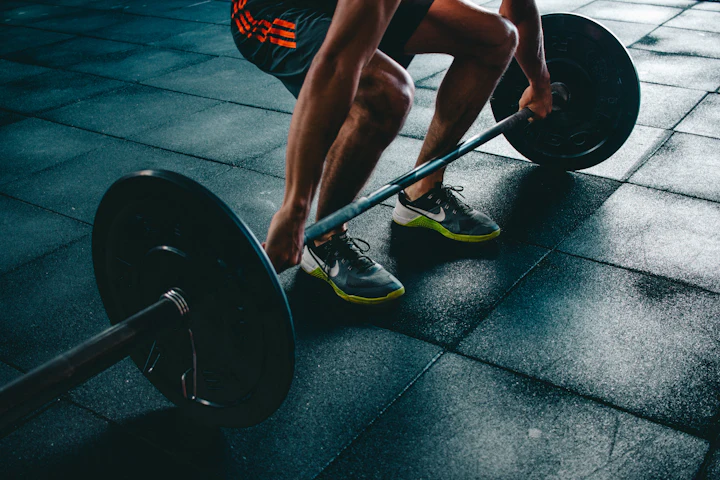
Beginner Strength Training Guide: Your First 8 Weeks
Learn the five movement patterns, how sets and reps work, and follow a simple 8-week, 3-day full-body plan to start lifting with confidence.
HIIT vs Steady-State Cardio for Fat Loss: Which Is Better?
Short and intense or long and steady? Compare HIIT and steady-state cardio, try a sample session of each, and learn how to mix both for fat loss.